

Investing in stocks can often yield positive returns, and even renowned investors like the Oracle of Omaha can occasionally overlook key opportunities. However, many of their stock picks remain valuable over time.
When searching for a promising stock investment, consider exploring ideas from Berkshire Hathaway‘s (BRK.A 0.55%) (BRK.B 1.06%) portfolio, meticulously curated by Warren Buffett. This strategy is worthwhile because, over the long term, shares of Berkshire consistently outperform the market, largely due to its strategic investments in publicly traded companies.
However, it is essential to note that not every holding in the Berkshire Hathaway portfolio is a guaranteed win. Occasionally, some stocks might be priced too high for new investors, while others may have deteriorated in value and performance.
With this context in mind, we will examine two stocks endorsed by Warren Buffett that present solid buying opportunities today, alongside one stock that you might want to avoid until significant positive changes occur.
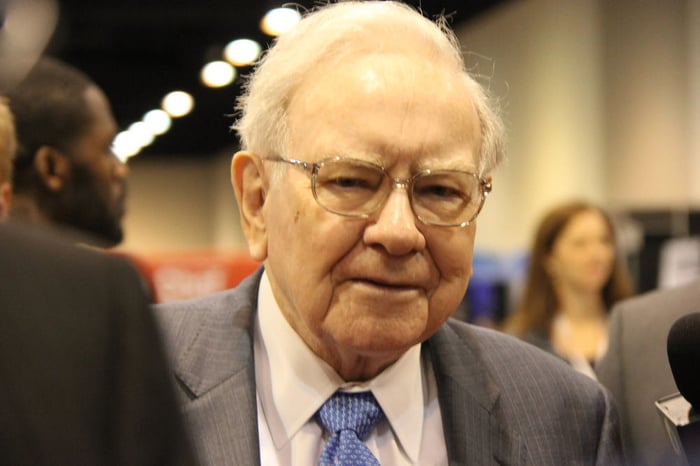
Image source: The Motley Fool.
Consider Investing in American Express for Long-Term Gains
Many investors may not realize that due to natural attrition and its impressive growth, the credit card powerhouse American Express (AXP 0.55%) has become Berkshire Hathaway’s second-largest stock holding. This accounts for an impressive 17% of the conglomerate’s publicly traded equity portfolio. This robust position reflects Berkshire’s confidence, as they also maintain smaller stakes in competitors like Visa and Mastercard, illustrating their preference for American Express.
Warren Buffett recognized the unique advantages of AmEx since he first invested in the company during the 1990s. Unlike its counterparts, American Express doesn’t merely function as a payment intermediary. Instead, it has built a comprehensive consumer ecosystem that includes card issuance, payment processing, and a valuable rewards program. This program incentivizes customers to spend, with some members even willing to pay up to $900 annually for the benefits. These perks encompass hotel credits, cash back on grocery purchases, and discounts on various entertainment options. This unique value proposition has proven challenging for competitors to replicate successfully.
Moreover, it is crucial to note that American Express cardholders generally belong to a more affluent demographic, which helps insulate them from economic downturns. As CEO Stephen Squeri highlighted in the Q2 report amid a turbulent economic landscape, “Our second-quarter results maintained the strong momentum we’ve experienced over recent quarters, with revenues increasing by 9 percent year-over-year to a record $17.9 billion, while adjusted earnings per share rose by 17 percent.”
Invest in Kroger for Steady Returns in the Grocery Sector
While not a major holding within Berkshire’s vast portfolio, Kroger (KR -0.08%) stands out as one of Berkshire Hathaway’s most reliable performers in the stock market.
As one of the largest grocery chains in the United States, operating 2,731 stores and generating annual sales of approximately $150 billion, Kroger is a household name. Although the company does not experience rapid growth or generate massive profits, its expected top-line growth of around 3% this year will likely result in operating income of nearly $5 billion. This is typical of the established, low-margin food industry.
Despite the challenges of the volatile food sector, Kroger has demonstrated remarkable consistency, achieving meaningful profits every year for over a decade. Over this time, the company has effectively doubled its net income, demonstrating its ability to adapt and remain relevant. Initiatives such as embracing e-commerce have significantly contributed to its success.
For potential investors, although Kroger’s growth figures may not seem particularly impressive, the company has discovered alternative methods to create substantial shareholder value. For instance, its quarterly dividend payments have surged by an impressive 250% over the last ten years, supported by stock buybacks that have significantly reduced the number of outstanding shares. In fact, if you had reinvested Kroger’s dividends into more shares over the past 30 years, your investment would have consistently outperformed the S&P 500.
Why You Should Think Twice Before Investing in UnitedHealth Group
While Warren Buffett recently acquired a small position in the troubled health insurance provider UnitedHealth Group (UNH -0.37%), it may be wise for you to exercise caution before following suit.
To provide some context, UnitedHealth has faced considerable challenges recently. Its shares have suffered since April, primarily due to a surprising earnings miss in the first quarter, followed by the sudden resignation of then-CEO Andrew Witty in May for “personal reasons.” Additionally, in July, the company revealed that the U.S. Department of Justice was investigating its Medicare billing practices. The second-quarter earnings report, released later that month, also came in below analysts’ expectations due to high reimbursement costs that had plagued the first quarter. Overall, from its peak to its lowest point, UNH stock plummeted by 60% earlier this year.
Buffett has famously advised investors to be fearful when others are greedy and greedy when others are fearful. Following this principle, he invested in UnitedHealth, believing that the established company would weather its current challenges. Berkshire Hathaway now holds 5 million shares of UNH, valued at nearly $2 billion.
However, this may be a situation where investors should tread carefully. The healthcare industry, including UnitedHealth Group, is increasingly encountering regulatory and pricing challenges. The company’s Medicare division faced similar scrutiny back in 2017, and just last year, its pharmacy benefits management branch, OptumRX, was sued by the Federal Trade Commission for inflating insulin prices. Furthermore, it is essential to recognize the federal government’s increasing examination of the healthcare sector, particularly as care costs have escalated beyond reasonable limits.
Despite UnitedHealth’s ability to grow its revenue consistently for over a decade, its operating profits and EBITDA have stagnated since early last year, not accounting for recent spikes in medical care costs.

UNH Revenue (TTM) data by YCharts
The healthcare industry appears to be at a critical juncture, and while this may not be catastrophic for UnitedHealth, it certainly raises concerns regarding its long-term value for investors. Therefore, it may be wise to remain on the sidelines and observe how the situation unfolds before committing to this uncertain investment opportunity.


