

If you exceed a certain income threshold, your monthly Social Security checks could be significantly reduced.
A striking 61% of U.S. adults report that they have to continue working later in life because their Social Security benefits are insufficient, according to a 2025 survey conducted by the Nationwide Retirement Institute. This statistic underscores the financial challenges many face as they navigate retirement.
While extending your working years is not the preferred choice for many individuals, it can be a strategic approach to boost your income amidst the uncertainties surrounding Social Security. However, there is a significant downside: if you continue to work while receiving benefits, your monthly payments may be drastically reduced. Starting in 2026, it is crucial to understand how much you can earn from employment before facing reductions in your benefits.
Understanding How Your Earnings Impact Your Social Security Benefits
First and foremost, it is vital to recognize that your benefits will only be reduced if you have not yet reached your full retirement age (FRA)—which typically ranges between ages 66 and 67, depending on your birth year. This age threshold is essential for determining eligibility for full benefits without penalties.
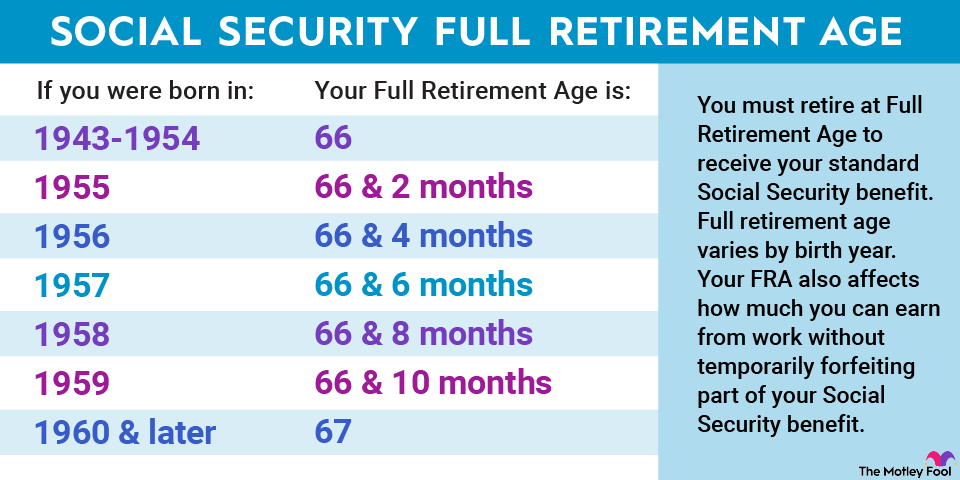
Image source: The Motley Fool.
If you have already reached your FRA, your earnings will not influence the amount of your benefits. However, if you will be under your FRA or are set to reach it in 2026, your income will be impacted by the retirement earnings test. This test is designed to assess how much of your Social Security benefits may be withheld based on your earnings.
The earnings test establishes an income ceiling that determines the extent of any benefit reductions due to your job income. The higher your earnings, the more significant the reductions can be. In some scenarios, a substantial portion of your benefits could be withheld, which can greatly affect your financial wellbeing.
These income limits are adjusted annually, and the positive news is that retirees can anticipate increased caps in 2026—allowing for higher earnings before any benefits are withheld.
| 2025 Income Limit | 2026 Income Limit | Benefit Reduction | |
|---|---|---|---|
| If you’ll be under FRA in 2026 | $23,400 | $24,480 | $1 reduction for every $2 over the limit |
| If you’ll reach FRA in 2026 | $62,160 | $65,160 | $1 reduction for every $3 over the limit |
Data source: Social Security Administration.
For instance, let’s say you are 65 years old with an FRA of 67, and you earn $30,000 annually working part-time. Since you will not reach your FRA in 2026, you fall under the lesser income limit. In this case, your income surpasses the limit by $5,520, leading to a yearly reduction in your benefits of $2,760, which translates to a loss of $230 each month.
If you are set to reach your FRA in 2026, only the income earned prior to the month you attain that age will contribute to the income limit calculations.
Recognizing the Temporary Nature of Benefit Reductions
The encouraging aspect for retirees is that these benefit reductions are not permanent. Once you reach your FRA, you will receive an adjusted benefit amount that will take into account all the funds that were previously withheld due to your income. Consequently, your monthly payment will increase moving forward, ensuring that your Social Security benefits remain consistent over time.
Overall, you should receive the same total amount from Social Security, regardless of the temporary withholding. However, it is prudent to be aware of your potential reductions, particularly if your finances are tight during retirement. Understanding these limits can help you better plan your financial future.
If continuing to work is a necessity due to financial constraints, your options may be limited. However, if you decide to work longer to enhance your income, and your benefits are substantially reduced because of your earnings, you must weigh whether this trade-off is beneficial in the short term, despite the promise of larger checks in the future.
Working during retirement can be an effective strategy to bolster your financial stability, but it is crucial to comprehend how your earnings will impact your Social Security benefits. By familiarizing yourself with the income limits and estimating potential benefit reductions ahead of time, you can prepare effectively for your financial future.


