

Many automotive manufacturers, including Ford, are strategically positioning themselves for a future dominated by electric vehicles (EVs). While Tesla has already established a strong foothold in this market, its lead is gradually diminishing.
The electric vehicle industry is filled with potential, yet it also confronts substantial challenges. Factors such as escalating material costs due to tariffs, economic uncertainties, and lukewarm consumer interest are creating obstacles for the success of EVs.
During this pivotal period of transformation, it’s prudent to evaluate which companies are at the forefront of the EV landscape and how their current market positions could enhance their stock value in the upcoming years, especially after market conditions stabilize.
This assessment makes it vital to analyze the standings of Ford (F -0.22%) and Tesla (TSLA 2.85%) at this juncture. Both companies are significant players in the automotive sector, but which one represents the superior long-term investment in EV stocks? Let’s delve deeper.
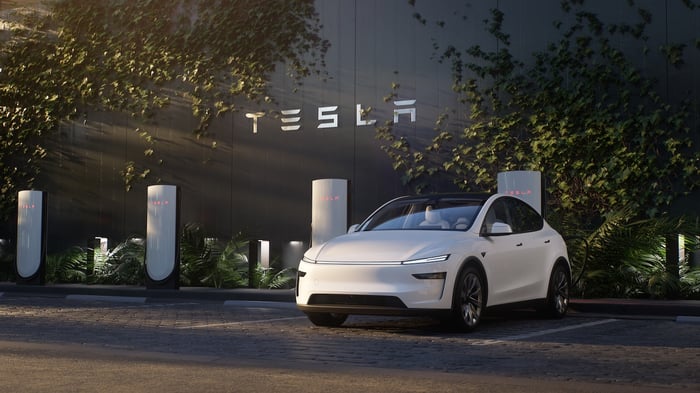
A Tesla Model Y. Image source: Tesla.
Understanding Tesla’s Dominance in the EV Market
It is hardly surprising that Tesla enjoys a significant advantage in the electric vehicle market, given that the company was founded specifically as an EV manufacturer. Unlike Ford, which is adapting from traditional automotive production, Tesla has been able to focus solely on electric innovation. It’s essential to recognize just how much of a lead Tesla has established as a leader in the EV sector compared to Ford.
In fact, among the top 10 best-selling EVs in the U.S. this year, three are from Tesla: the Cybertruck, the Model Y, and the Model 3. Tesla dominates the list, holding the top two positions. Overall, the company has sold an estimated 721,000 EVs in the U.S. during the first half of this year, demonstrating its strong market presence.
On the other hand, Ford has made strides with two models featured on the best-selling EV list: the Lightning pickup and the Mustang Mach-E. However, the disparity between Tesla and Ford becomes glaringly evident when examining sales figures, as Ford has only managed to sell 47,200 EVs in the first seven months of this year. This staggering difference reveals that Tesla is selling more than 15 times the number of electric vehicles that Ford currently offers.
It is worth noting, though, that Tesla’s sales are currently facing significant challenges. The company has reported a 13% decline in vehicle deliveries compared to the same quarter last year. While Tesla remains the industry leader, there is clearly work to be done to maintain its position. Ford, too, is encountering a slowdown, with its EV sales dropping by 10%.
Exploring Tesla’s Long-Term Innovations Beyond EVs
At present, Tesla’s brand is experiencing some difficulties, largely due to CEO Elon Musk’s previous involvement with the Department of Government Efficiency and his controversial political stances, which have diverted his attention from effectively managing the company.
Despite these challenges, Tesla is aiming for a future that extends beyond just electric vehicles. The company has announced plans to produce 5,000 Optimus humanoid robots this year and has initiated a limited robotaxi service, aligning with Musk’s broader vision for autonomous vehicles.
Both of these initiatives represent potential lucrative ventures, although they remain in their nascent stages. For instance, the market for humanoid robotics is projected to reach an estimated $5 trillion by 2050, according to Morgan Stanley.
Conversely, Ford is still navigating the complexities of the electric vehicle market. CEO Jim Farley recently stated that the company is “planning to design and build a breakthrough electric vehicle and platform in the U.S.” next year, indicating its commitment to innovation in this arena.
I tend to give automakers some leniency as they work to determine the best strategies amid a challenging selling environment. However, if I were to choose between investing in the stock of a company that has already achieved success with EVs (and is branching out into new, innovative markets) and an automaker still grappling with electric vehicle development, I would clearly opt for the former.
Evaluating Investment Potential: Why Tesla is the Preferred EV Stock
The fact that one company excels over another in a particular area—such as manufacturing and selling electric vehicles—does not automatically imply that its stock is a worthwhile investment. Tesla faces several formidable challenges in the upcoming years, including the need for Musk to maintain a steadfast focus on managing the company, revitalizing EV sales, and potentially launching a new vehicle model.
Therefore, if you are intent on acquiring an EV stock and are weighing the options between Tesla and Ford, I would undoubtedly recommend Tesla. However, it is crucial to acknowledge that the company is currently experiencing a decline in both sales and earnings, and it may take some time before a recovery occurs.


